

.svg)
February 27, 2026
The Need in Canada: Why Local Giving Matters More Than Ever
The Earliest Years: Children Growing Up in Hardship
The story of need in Canada starts with our youngest. An estimated 150,000 children are living in foster homes, institutional settings, or with extended family, reflecting how many young lives are shaped by instability instead of security and permanence. (2016 Census) 1 in 5 children in Canada live in poverty, which translates to about 1.4 million children whose families struggle to provide basics like safe housing, nutritious food, and stable routines.(Campaign 2000)
The risk is even higher for children in single-parent households. A child in a lone-parent home faces nearly four times the risk of poverty, and when that parent is an immigrant mother, the poverty rate rises to 26.5%—the highest in the country for any family type (Statistics Canada). These numbers describe classrooms where children arrive hungry, homes where parents must choose between bills and groceries, and futures marked by stress instead of stability.(Statistics Canada)
Households Under Pressure: The Cost of Everyday Life
Across the country, households are feeling the strain of rising costs and incomes that can’t keep up. Food bank visits have doubled since 2019, with nearly 2.2 million visits in March 2025 alone—the highest in Canadian history and a clear sign that what was once emergency help is becoming part of everyday survival for many families. (Food Banks Canada) half of Canadians, 45%, report struggling to cover daily expenses, from food to transportation to basic services, as the cost of living continues to climb. (Statistics Canada)
For some, the choices are even more painful. About 1 in 7 Canadians report forgoing essentials like food or medicine just to pay energy bills, a stark indicator of how basic utilities now force people into impossible trade-offs. Behind these statistics are real households quietly cutting back on meals, delaying prescriptions, and living in constant anxiety about the next bill. (CBC)
Newcomers Finding Their Footing: Starting Again from Zero
Newcomers often arrive in Canada with hope, courage, and the desire to build a better life—but the financial path is steep. Around 43% of recent immigrants say it is very difficult to meet financial needs, as high housing costs and low starting wages squeeze their budgets from the moment they arrive. Even highly skilled newcomers face major barriers when employers do not recognize their credentials, experience, or professional networks. (CBC)
Roughly 70% of newcomers report struggling to find suitable work because of these barriers, which delays their progress and affects their children, housing, and ability to participate fully in community life (Statistics Canada). It is no surprise that about 34% of food bank clients are newcomers who have been in Canada for 10 years or less, showing how long it can take to reach stability. For many, the journey is measured in years of underemployment and sacrifice before they can stand firmly on their feet. (Food Banks Canada)
The Costs No One Plans For: Illness, Disability, and Basic Care
Even households that are managing day-to-day expenses, unexpected needs can quickly push them into a crisis. For people facing cancer, about 20% of related costs—such as travel, medications not fully covered, and other supports—are paid out of pocket by patients and their caregivers, adding financial strain to an already exhausting emotional and physical burden.(Canadian Cancer Society)
Canadians living with disabilities are also disproportionately affected. Around 43% report being deeply concerned about housing affordability, especially when accessible options are limited and often more expensive. At the same time, about 1 in 4 Canadians avoid going to the dentist due to cost, turning essential health care into something many feel they simply cannot afford. These quiet gaps determine whether people can live with dignity or constant compromise.(Statistics Canada)
Aging Without Security: Our Seniors on the Edge
Canada’s population is aging, and many seniors are doing so without financial security. Roughly 7.6 million seniors in Canada face housing instability as fixed incomes struggle to keep up with rising rents, utilities, and basic living costs. After a lifetime of work and contribution, too many elders are forced to downsize abruptly, move away from familiar communities, or live with the daily fear of not being able to afford their homes.(CBC)
For seniors who are alone, widowed, or managing health issues, this instability can quickly turn into isolation and crisis. When we talk about “the need,” we are talking about parents and grandparents who should be enjoying peace in their later years but instead are counting every dollar and worrying about the next rent increase.
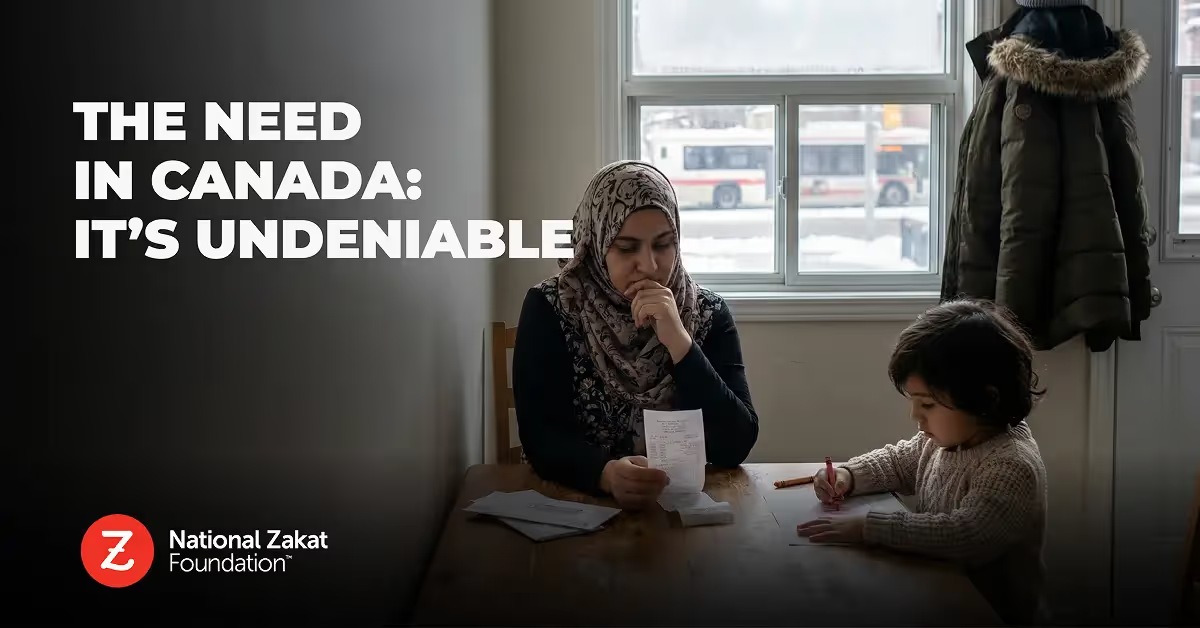
The need globally is easily visible. But in Canada, it’s undeniable—and it is right on our doorsteps. Local Zakat and Sadaqah have the power to meet these needs where they are: in children’s homes, in newcomer families, in hospital waiting rooms, and in seniors’ apartments. When we give locally, we are not just responding to statistics; we are standing with our neighbours, living our faith, and turning shared concern into shared mercy.

recent news
The Latest Updates in Our Organization
Here you will find updates on the latest happenings and developments at National Zakat Foundation Canada.